Whitewashing or Simplifying Agatha Christie

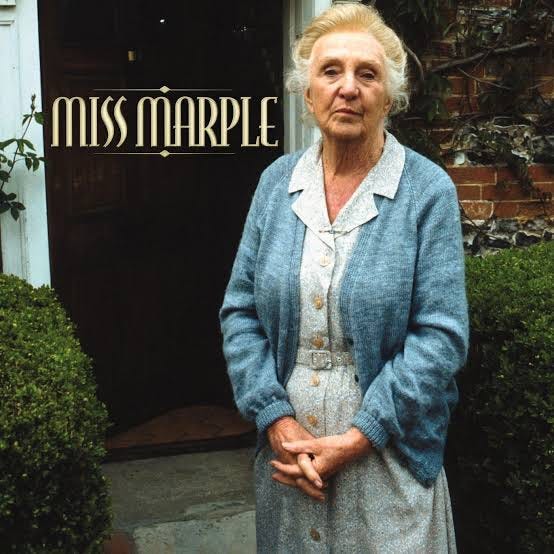
I began reading Agatha Christie’s novels a long time ago—though I haven’t read them all, maybe just three or four. Back in my home country, my family was obsessed with the Miss Marple series, especially the version starring Joan Hickson. My sister used to say Miss Marple reminded her of our mother—and interestingly, my mother wasn’t offended. We adored that character and eagerly awaited each new episode.
And then came David Suchet as Poirot—what a revelation. I may be exaggerating, but he was so good in the role that I felt I could take a break from reading the books and just watch the adaptations.
That changed in recent years. I began hearing critiques of Christie’s writing—claims that her prose was mediocre and it was only her plots that made her books memorable. Curious and slightly skeptical, I returned to her work and was, once again, in awe. Especially after watching newer adaptations, I wanted to revisit how Christie wrote novels like Endless Night or And Then There Were None. But what drew me most recently was Ordeal by Innocence.
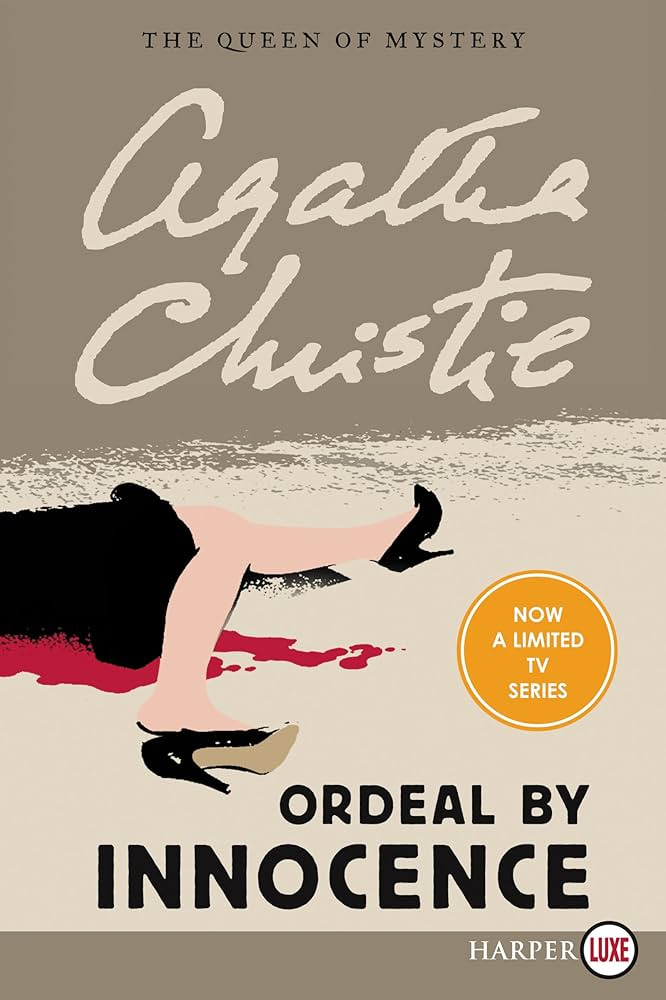
Ordeal by Innocence, The Novel
The novel opens after Jacko Argyle has been convicted of killing his adoptive mother, Rachel—and has died in prison. But when Dr. Arthur Calgary arrives with proof of Jacko’s innocence, the family is thrown into turmoil.
The murder victim, Rachel Argyle, a wealthy woman, is a fascinating character. She adopted five children after the war, at least one of whom is clearly a person of colour. Among them is Tina, who is described with racially coded language indicating she is a person of colour, and Mickey, whose appearance and behaviour set him apart, sometimes interpreted as being of mixed or non-white heritage. Christie boldly characterized the children's diverse identities to reflect the dynamics of postwar society, especially the fate of abandoned or orphaned children amid economic hardship and shifting family structures.
So, if Jacko didn’t kill Rachel, who did?
The plot unfolds as the reader gradually learns how this unusual family was shaped. Then—true to Christie’s style—a second murder occurs, followed by a plot twist and a fascinating final revelation.
Film Adaptations
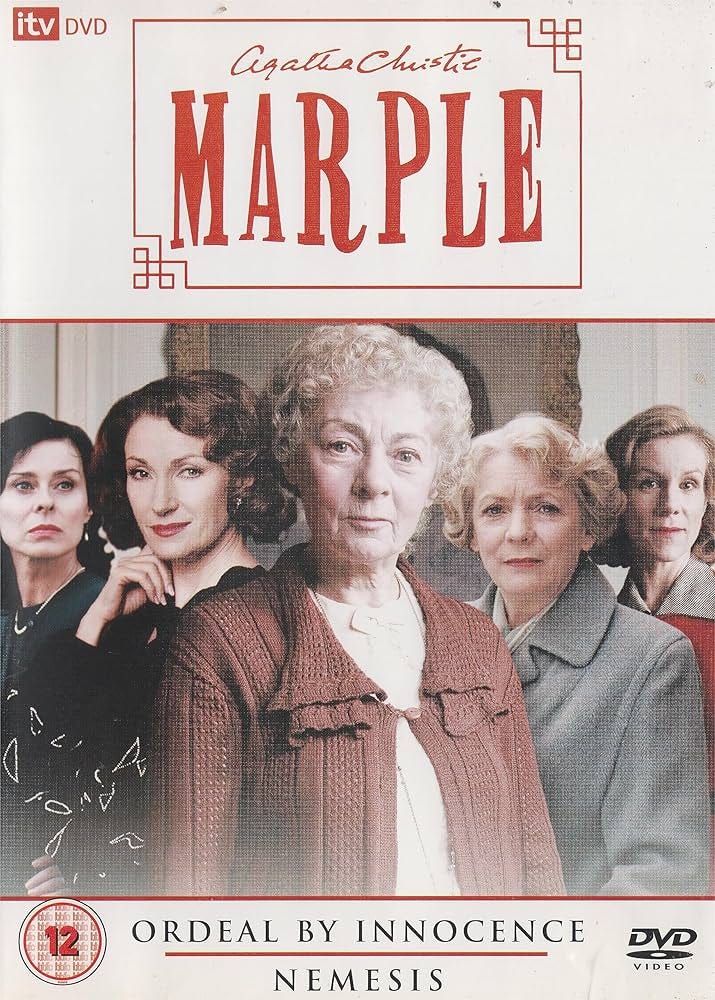
I first saw Ordeal by Innocence in one of the Miss Marple TV adaptations, featuring Geraldine McEwan. While the original novel is standalone, they inserted Marple into the story. I didn’t mind this at all—in fact, I wish they did it more often. Except for inserting Miss Marple, I think this one was the closest to the novel.
Then, I discovered the 1984 film version, starring Donald Sutherland and Christopher Plummer. A promising cast. I was excited, especially knowing it was made before identity politics became part of the creative decision. But my excitement turned into disappointment.
In this adaptation, all the children were white. The complexity of Rachel's character and her relationships with her adopted children, particularly across racial and cultural lines, was lost. I couldn’t help but wonder if this change was made to make the story more appealing to a white audience. I would love to be proven wrong about this.
Christopher Plummer’s character was also altered. In the book, he’s a charming, thoughtful historian. In the movie, he’s a gun-obsessed hunter, as if that’s all they know about portraying an American landowner. These choices stripped the story of the layers Christie had embedded.
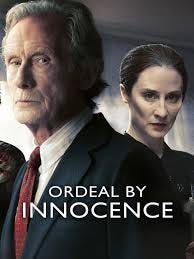
A later mini-series adaptation from 2018, featuring a stellar British cast including Bill Nighy, took further liberties. It changed the ending and even the murderer—something I’m not necessarily against, as it can re-ignite interest in the book. But in doing so, it also simplified the psychological depth between characters, especially the connection between one of the children and the murderer (I’m avoiding spoilers here).
Why is reading Christie more than an entertaining escape?
Ordeal by Innocence offers subtle but potent themes: women in power and the abuse of it, the taboo of cross-generational romance, the psychology of adoption, and the fine line between nurture and control. Some strongly believe that Christie condemns adoption, but she could also use this as a premise to present its moral complexities.
The style of writing has evolved, and that is not just Christie. From the point of view changes in one chapter, to the dialogue tags and the description of characters' inner feelings. Yet in Christie, I always search for solving the riddles, parallel to solving the murder mystery. Her post-war settings, character complexity, and lack of discrimination by gender or race regarding portraying the criminals, along with her voice against capital punishment, make her writing timeless.
I hope filmmakers continue to create more adaptations, even altering their plots, characters, and murderers. It is Christie’s hidden riddles that I hope they capture and remain faithful.